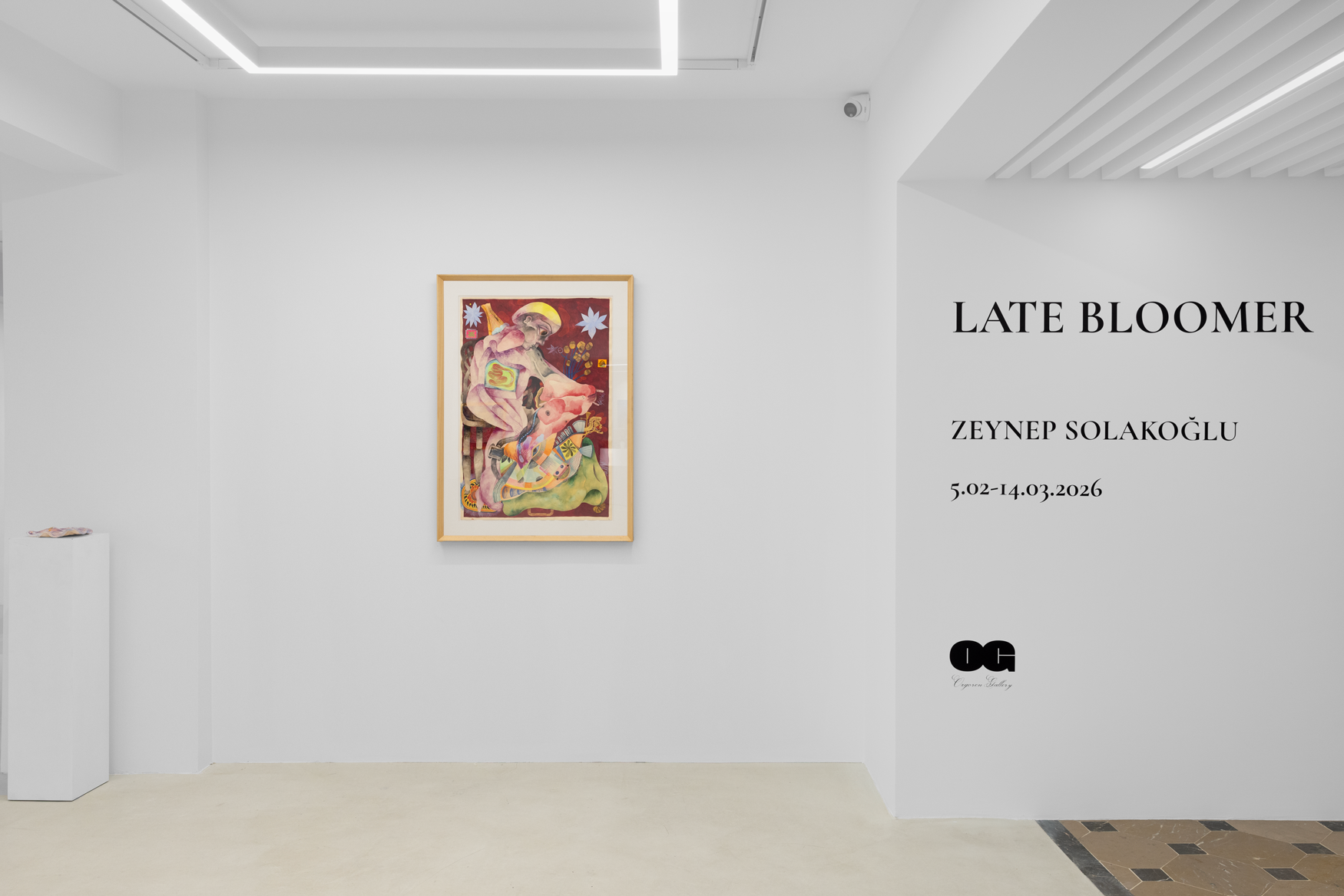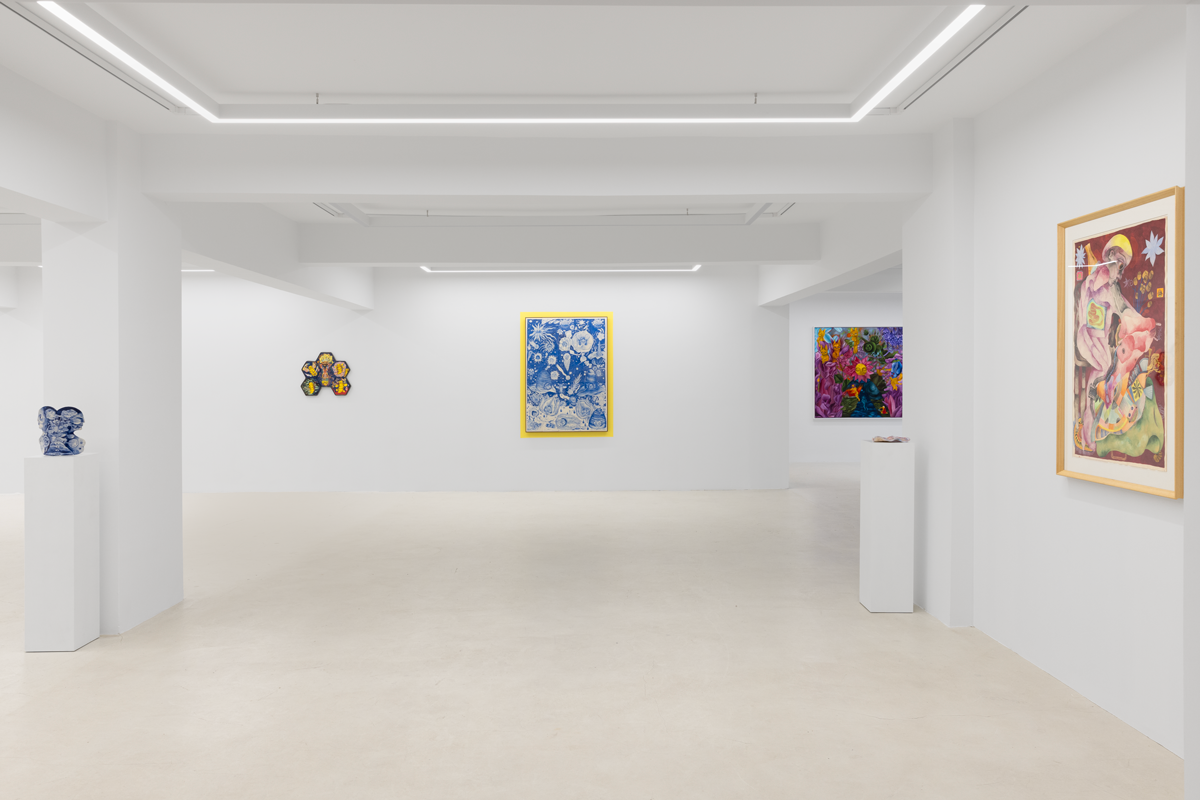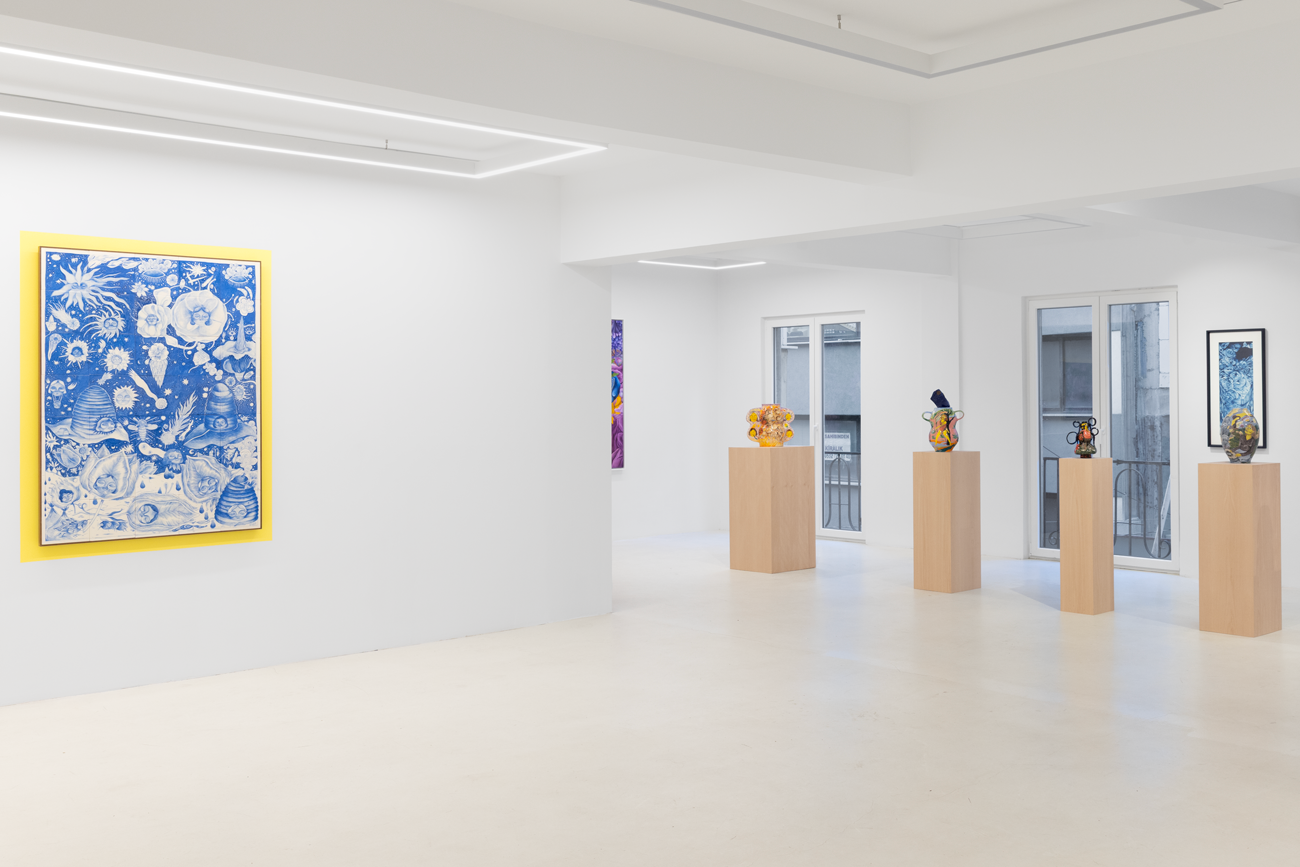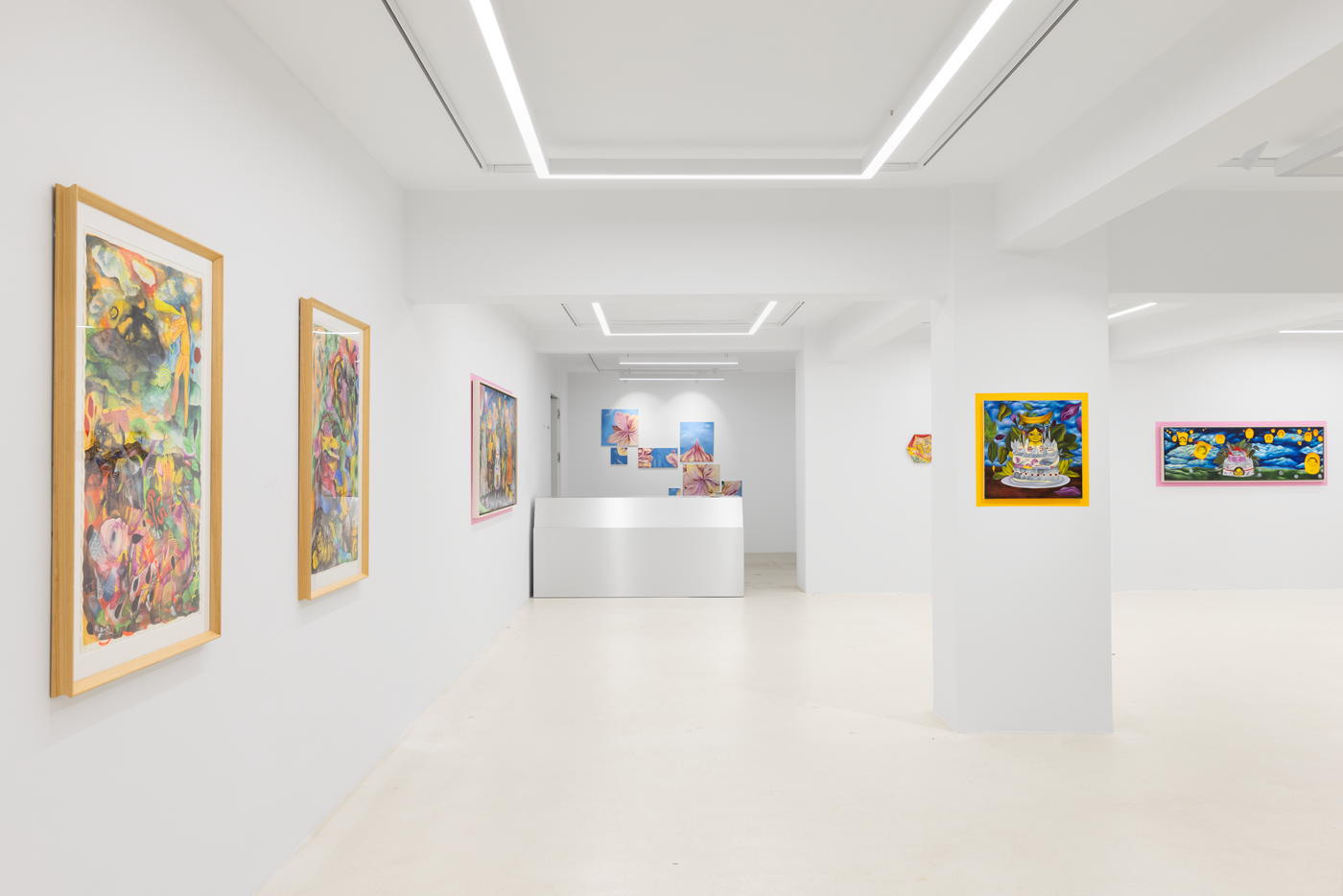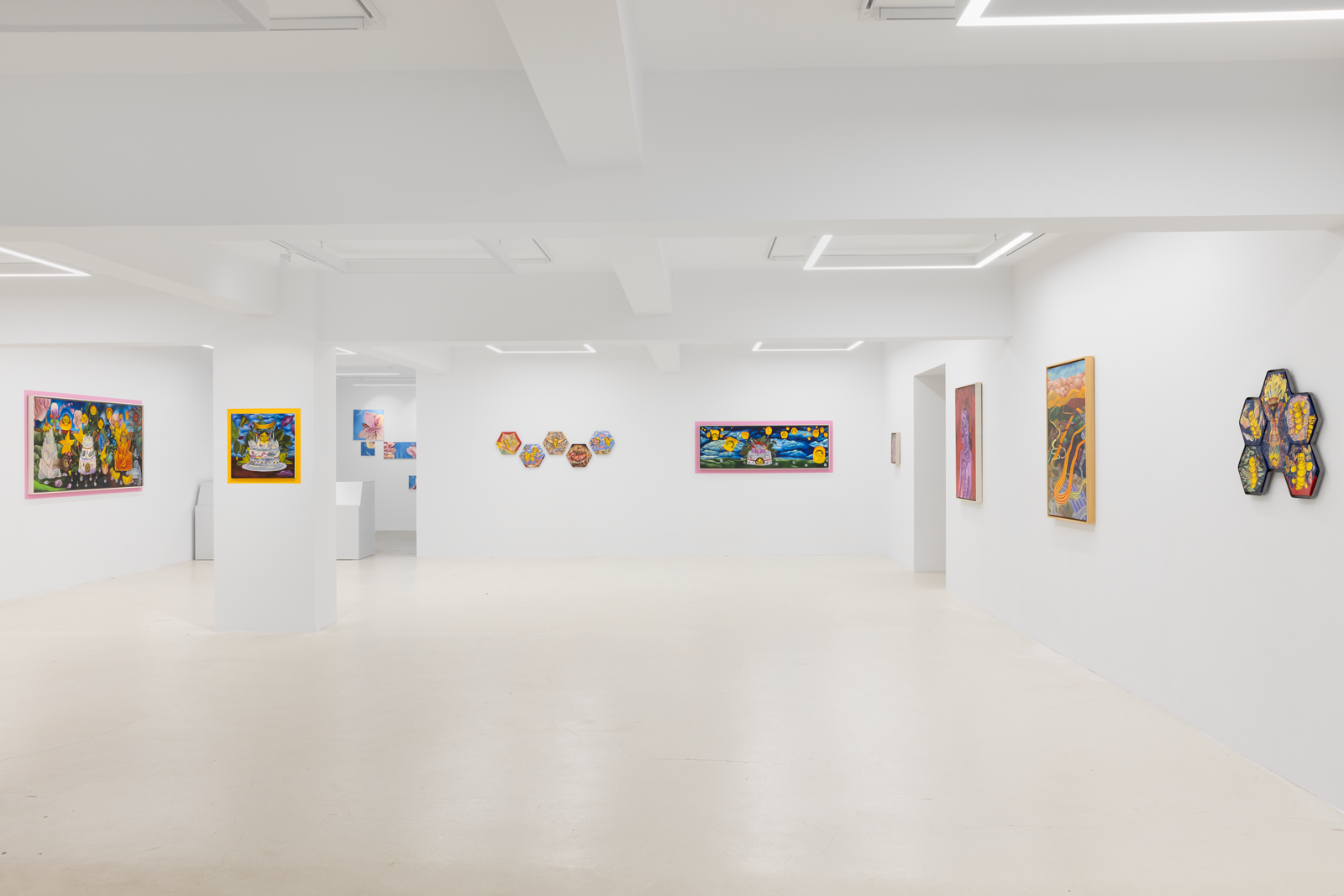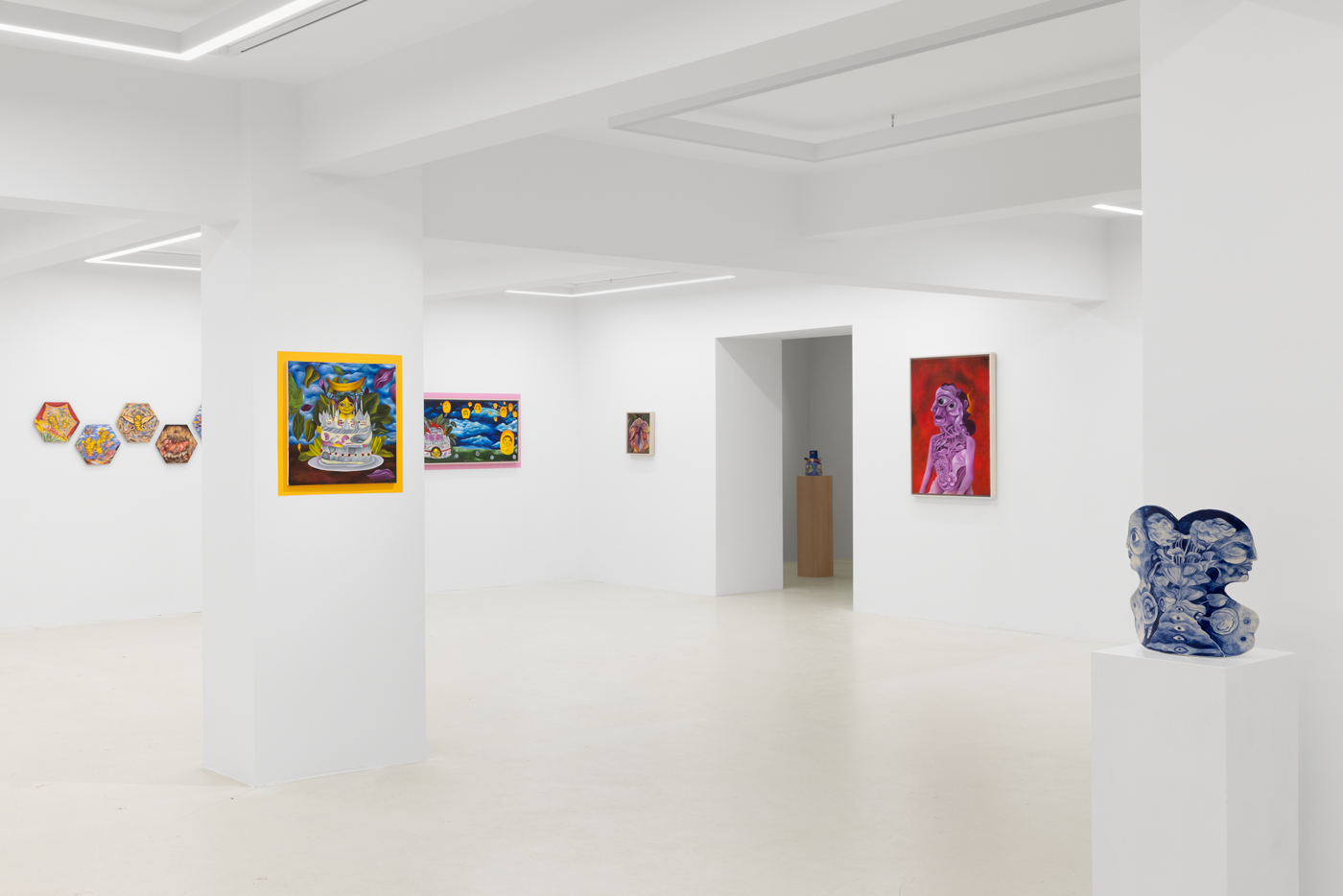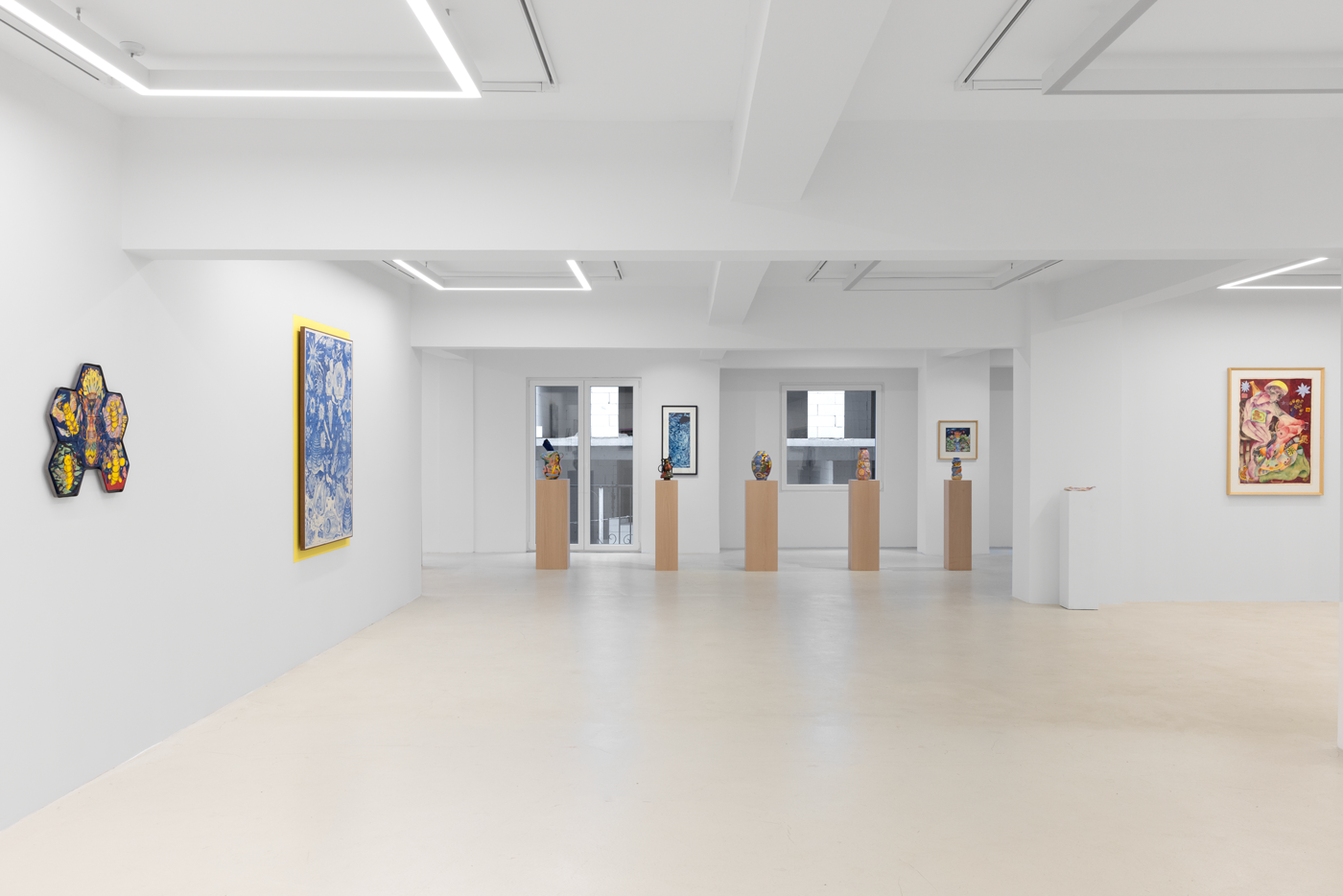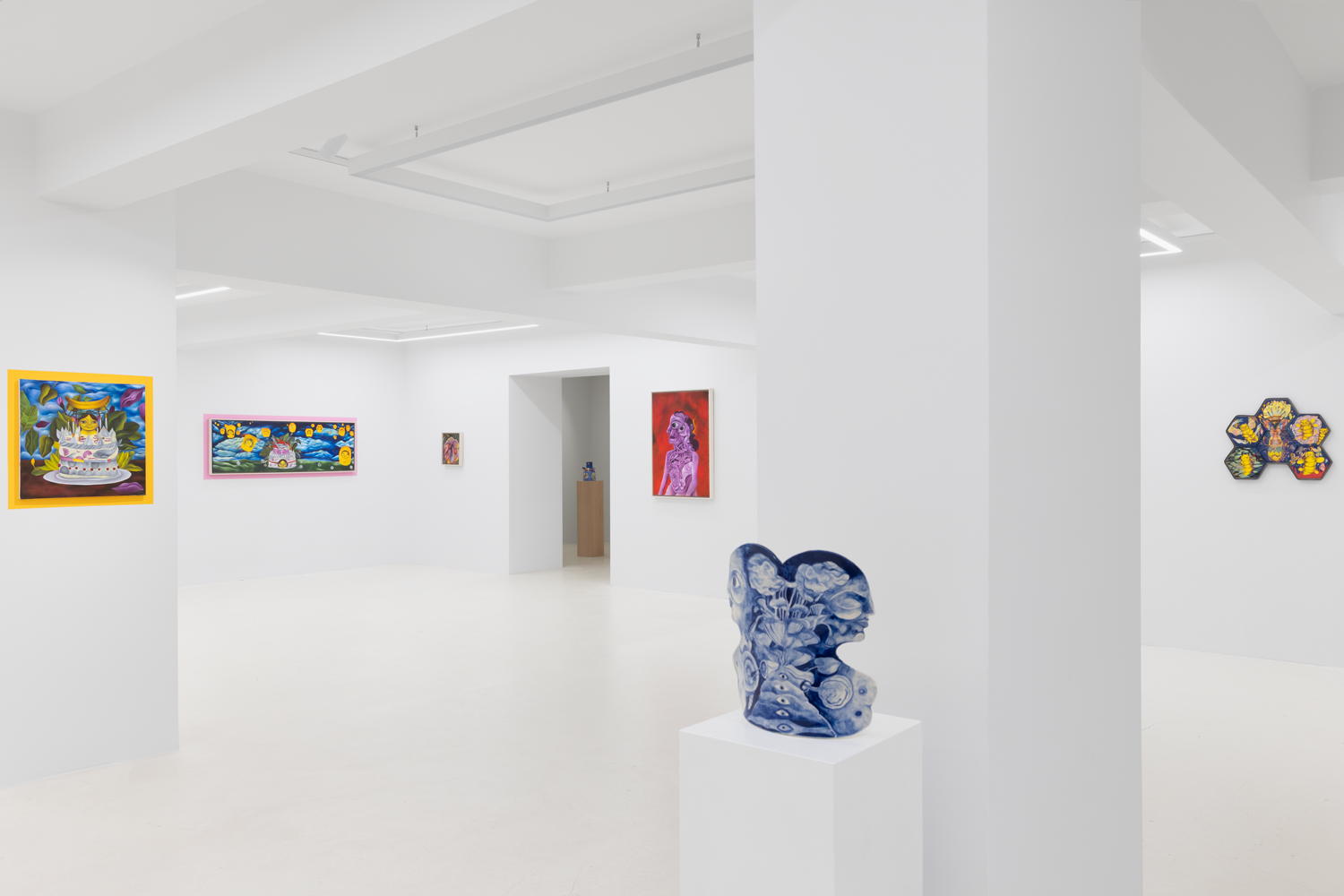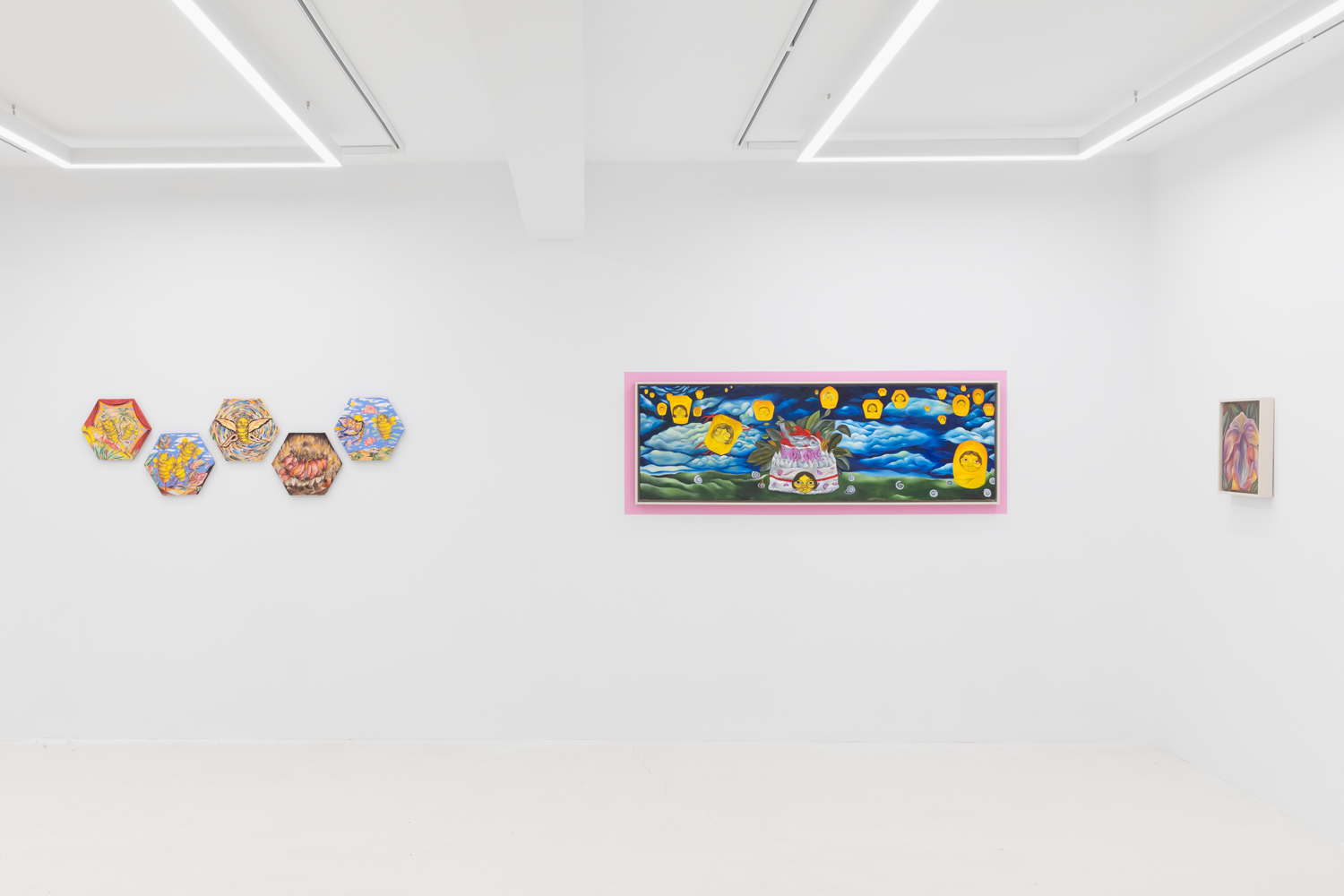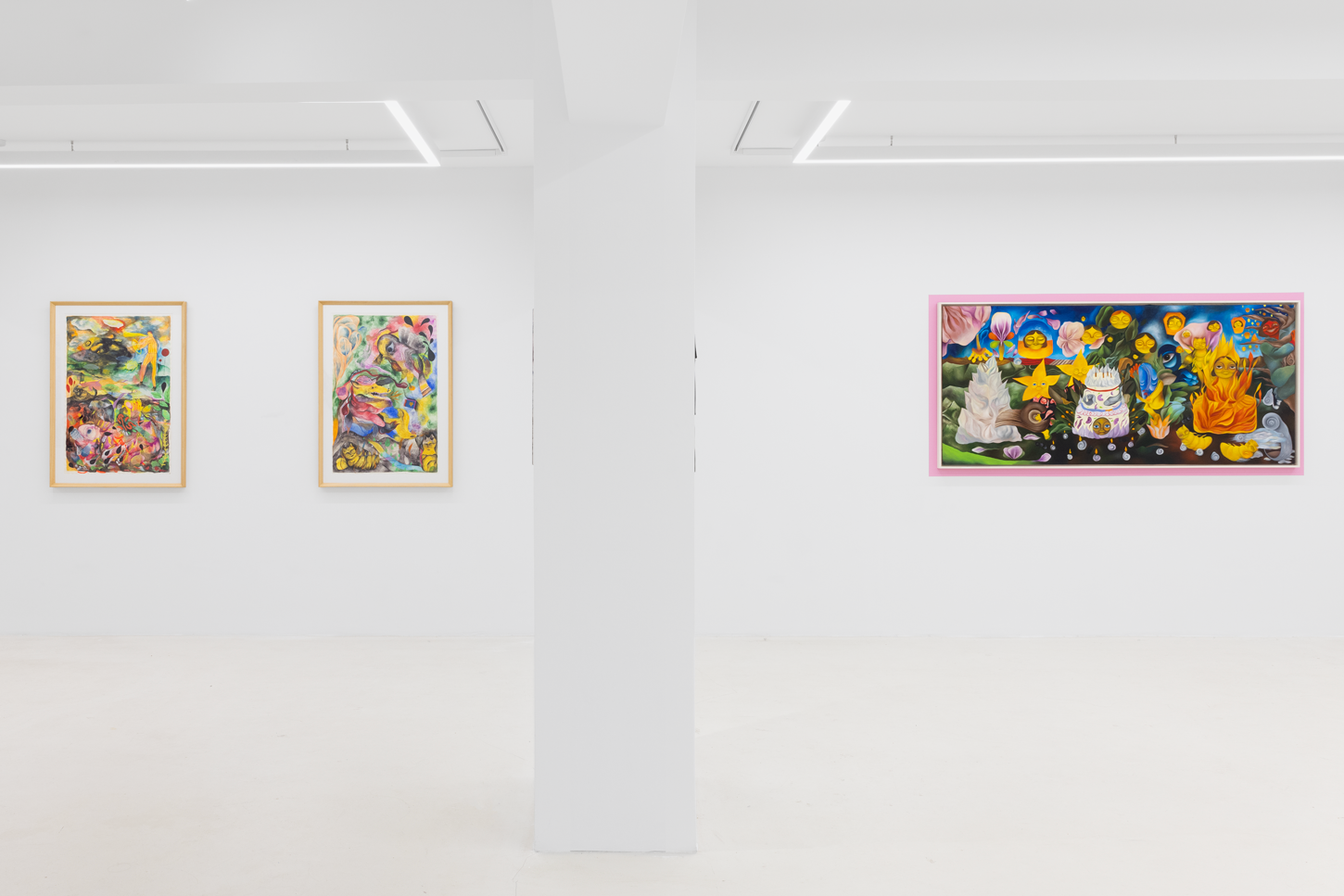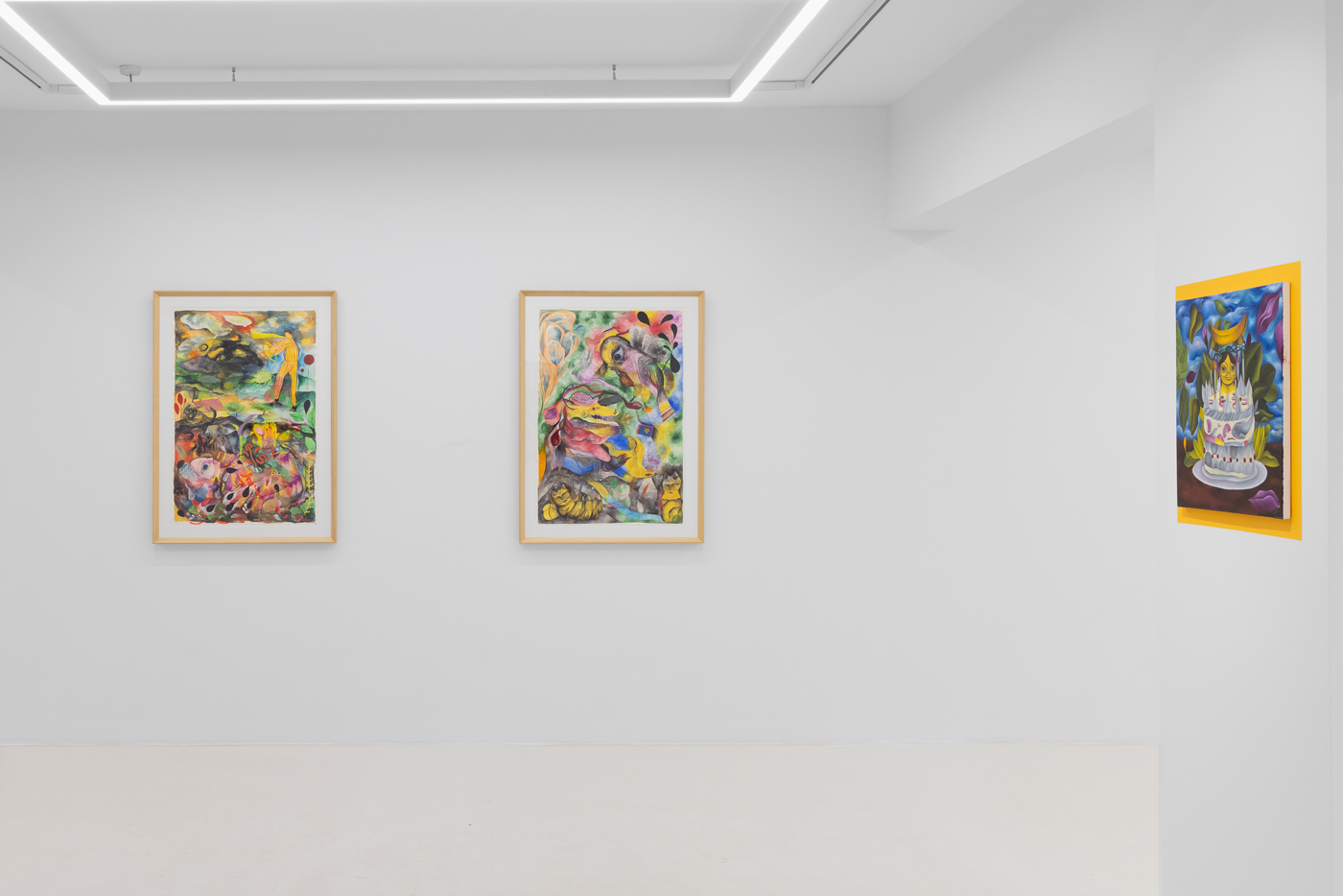
OG Gallery is pleased to present Late Bloomer, Zeynep Solakoğlu’s first solo exhibition with the gallery.
In nature, there is no such thing as being late; there is only time—an order that unfolds according to its own rhythm, cycles, and laws. “Late blooming” is a modern narrative born from humanity’s estrangement from its natural rhythm: a desire to divide time into stages, to compare, and to construct a system structured around competition and reward. Late Bloomer stands against this narrative, reminding us that every being, every story, and every transformation unfolds in its own time.
The works brought together in the exhibition revolve around a layered and expansive inner universe. In Solakoğlu’s practice, isolation is not the opposite of socialization, but a parallel and necessary condition. The expansion of the inner world and immersion in the outer one are not opposing states, but simultaneous and mutually sustaining modes of creative existence.
At the centre of this universe lies a fable-like narrative:
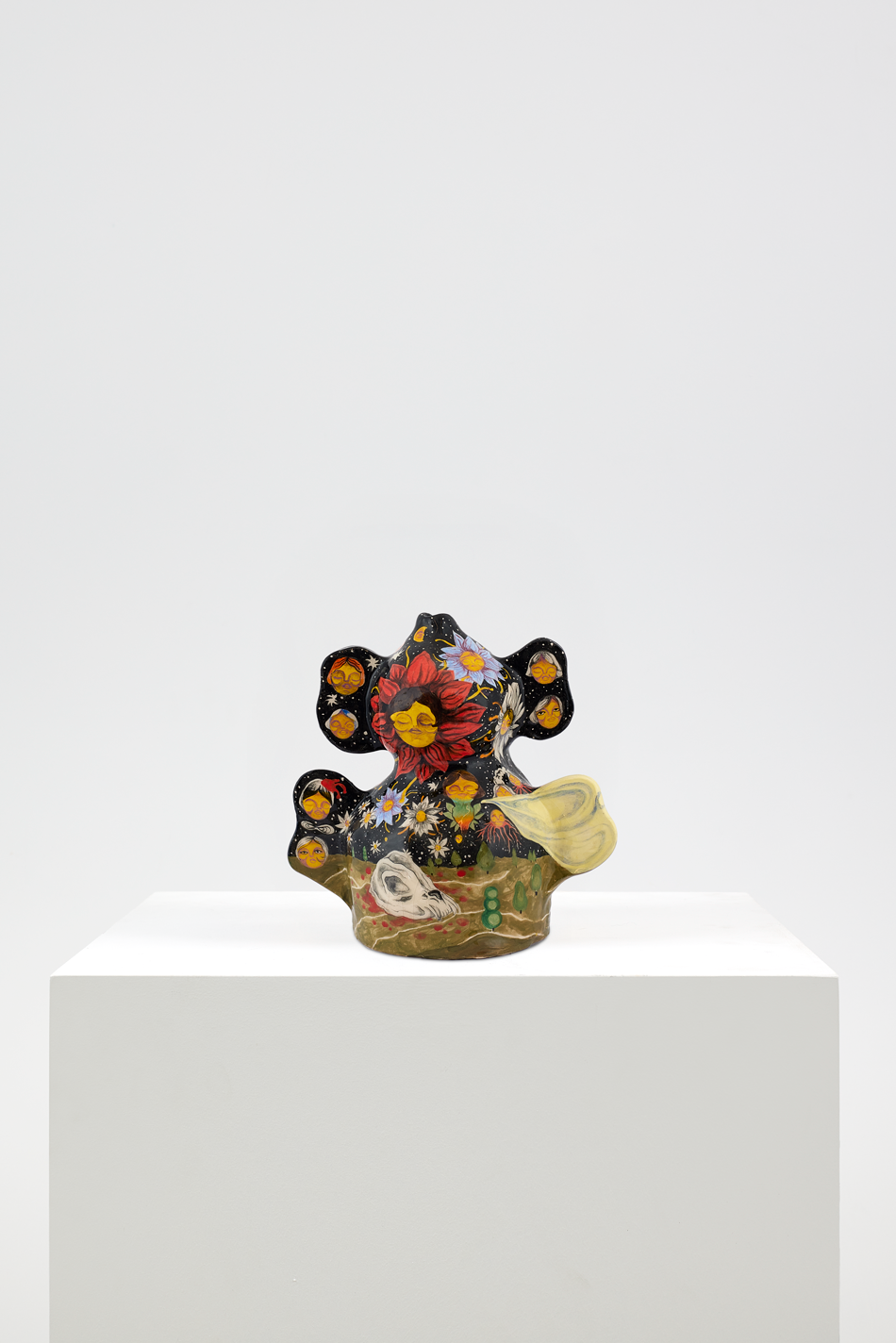
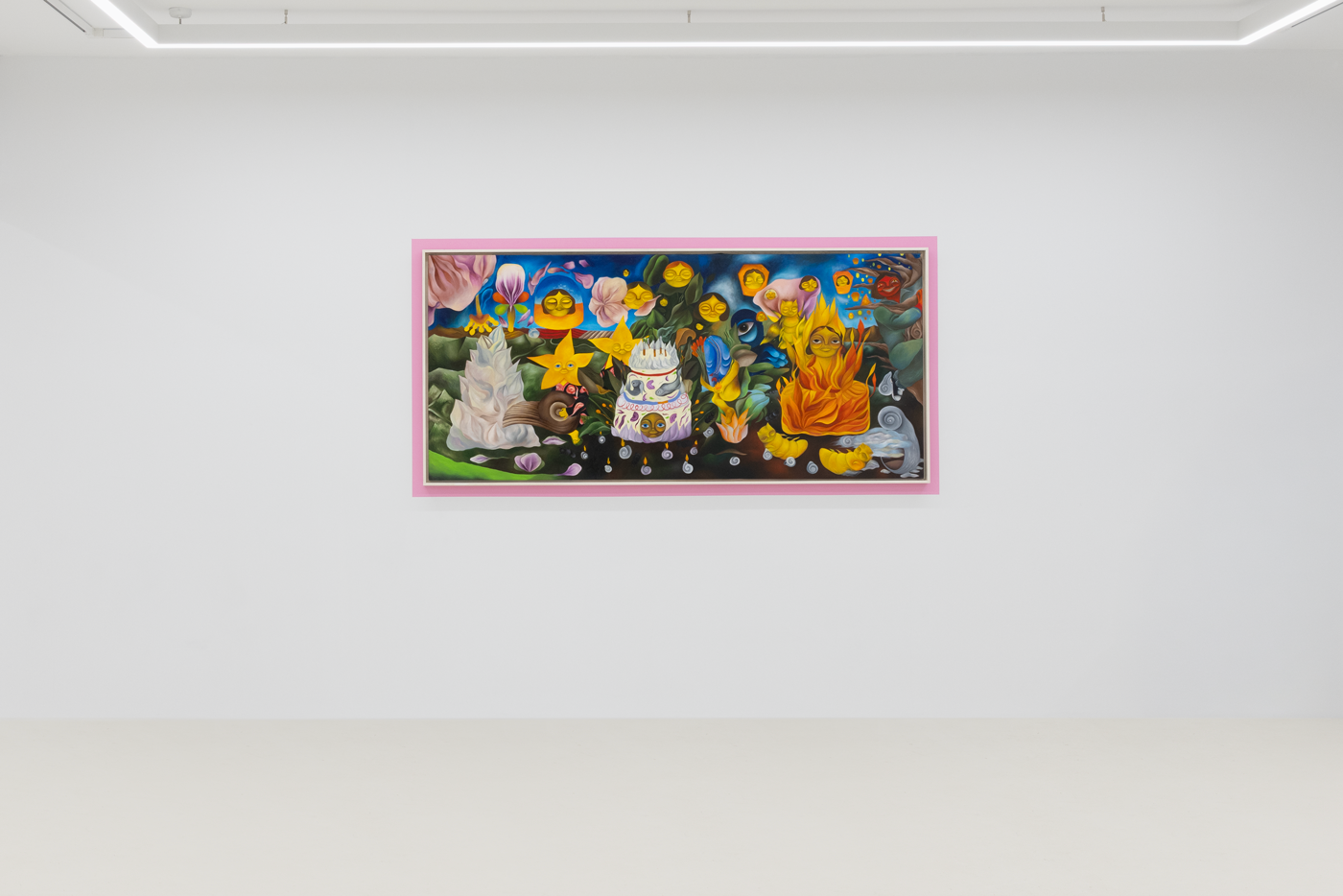
A girl’s head is stolen by a wolf and placed inside a cage made half of ice, half of fire, suspended within time. While her head remains hanging in this temporal void, her body stays on the physical plane. As the girl begins to dream, her head drifts further and further away from her body; divided in two, her body remains rooted in reality, fixed to its place, taking root.
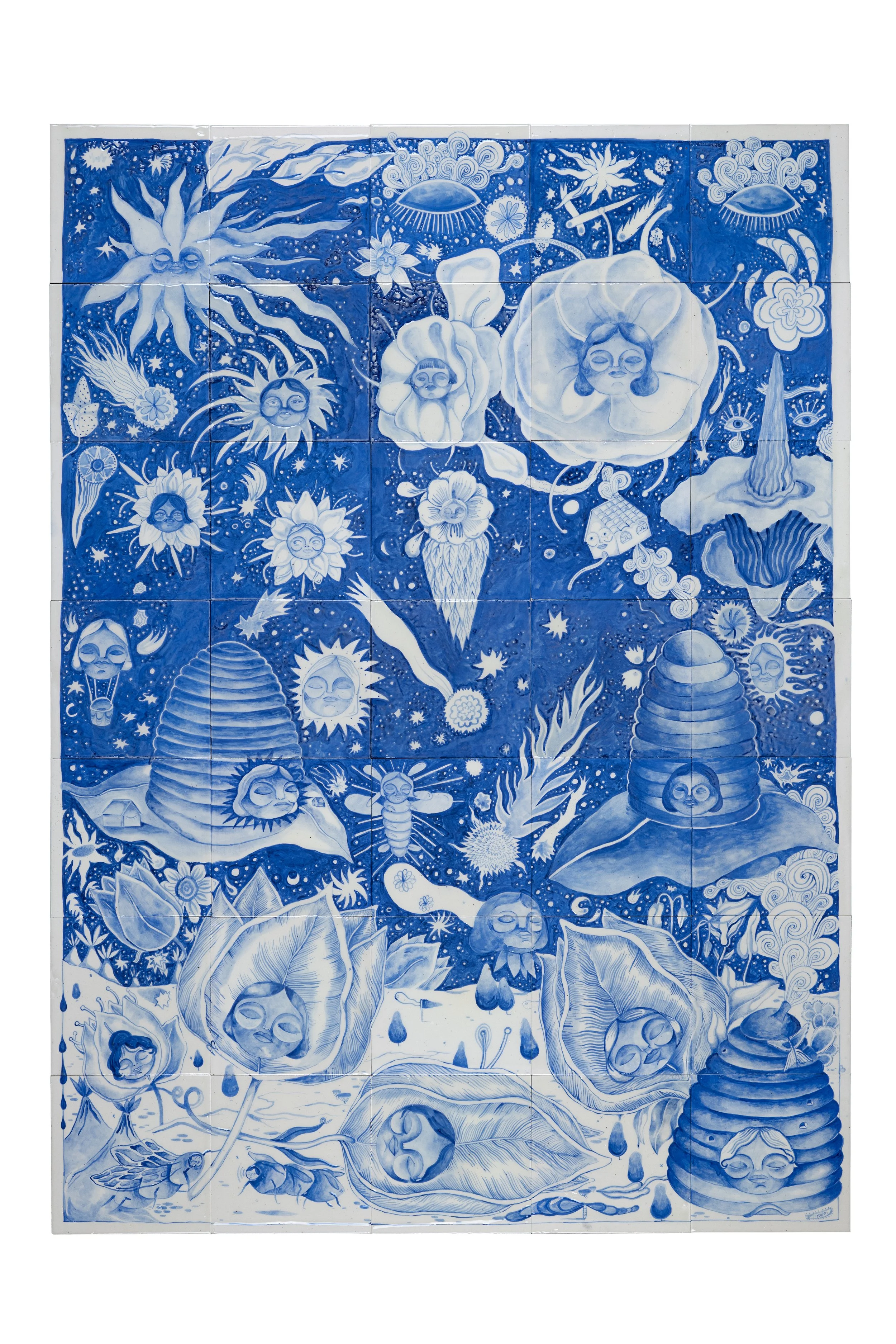
Throughout the exhibition, heads floating inside wish lanterns and cakes repeatedly appear around this narrative. The drifting heads turn into dreaming minds, while the cakes stand for life’s unpredictable encounters—moments that present themselves to us sometimes as invitations, sometimes as sudden and unsettling disruptions.
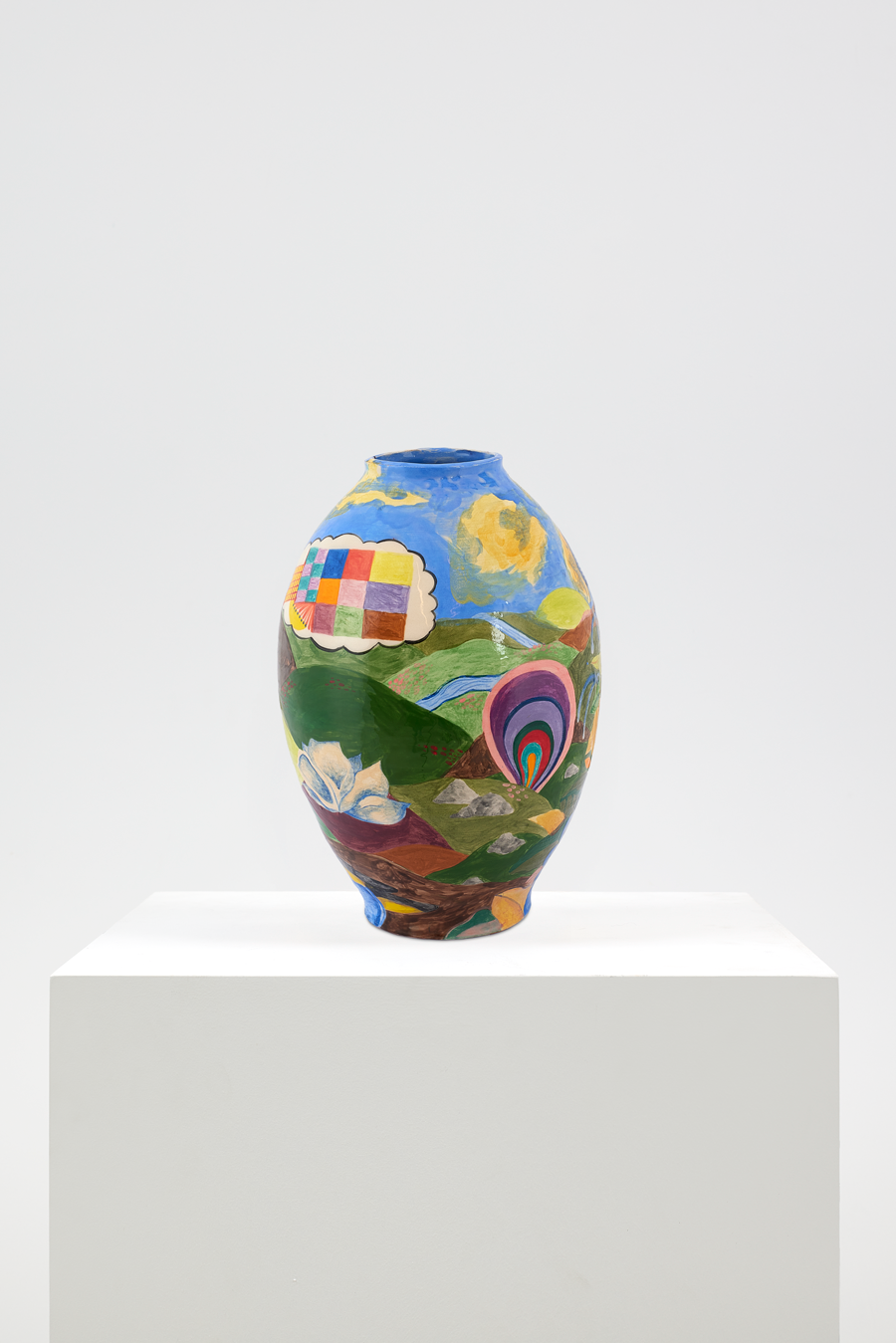
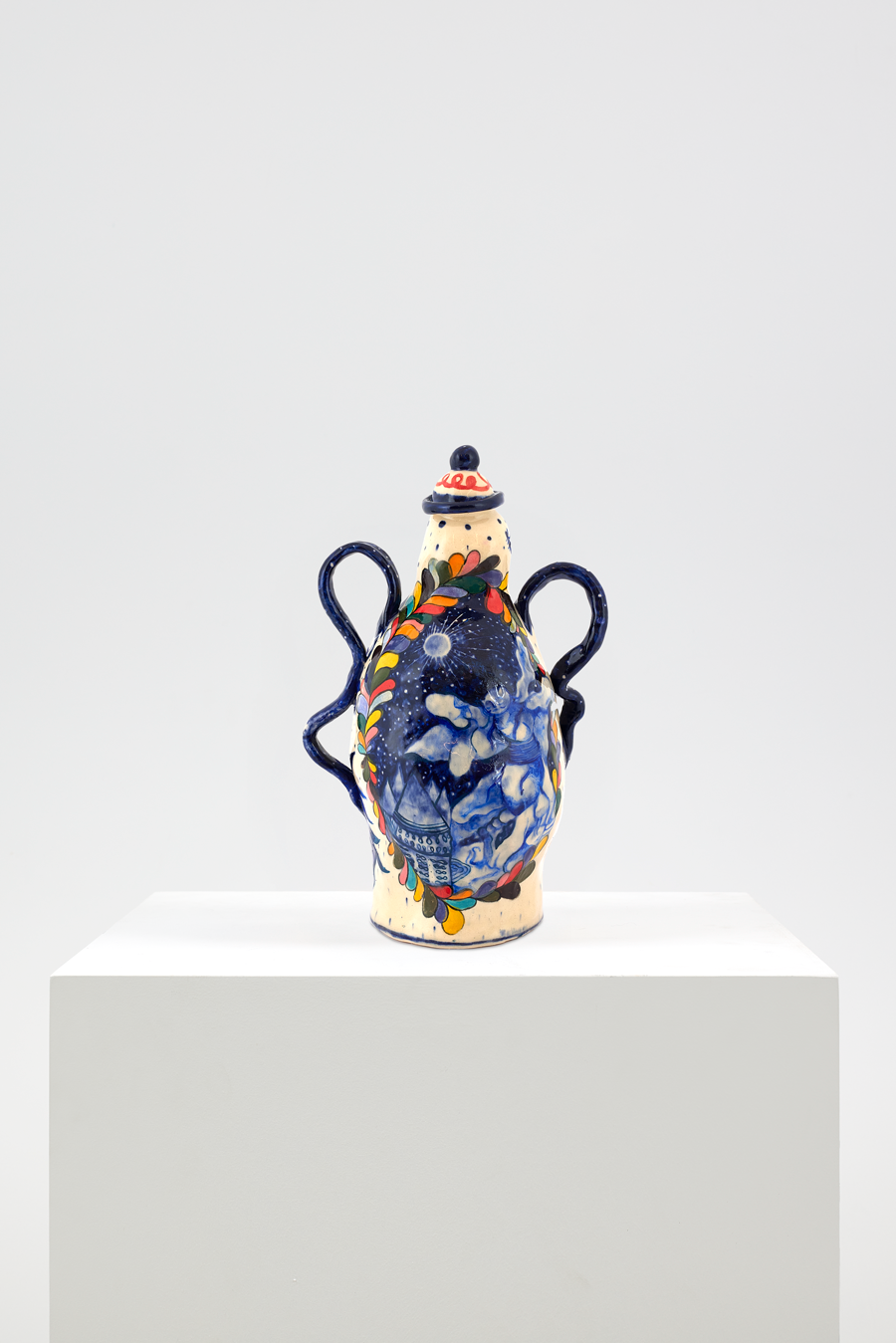
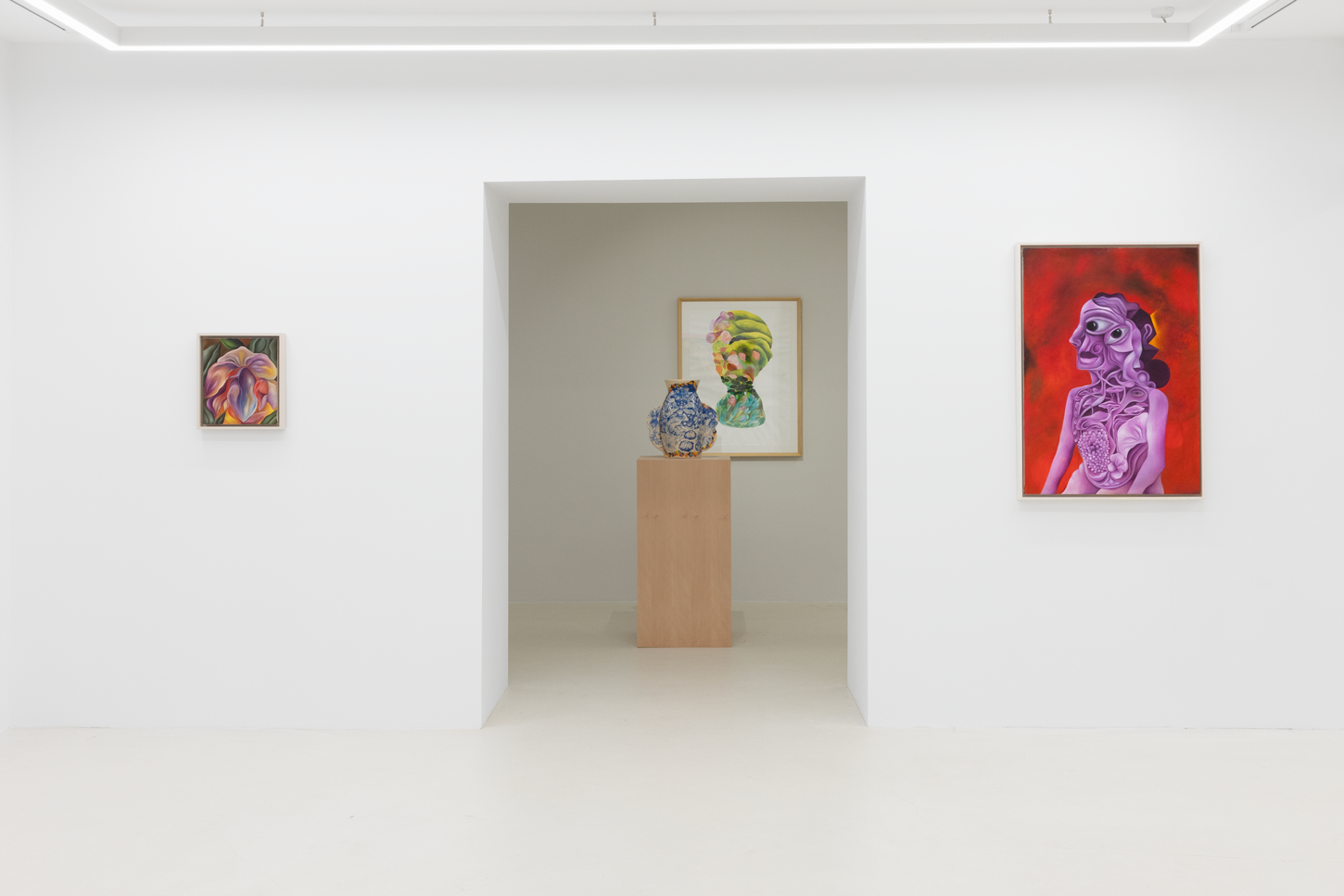
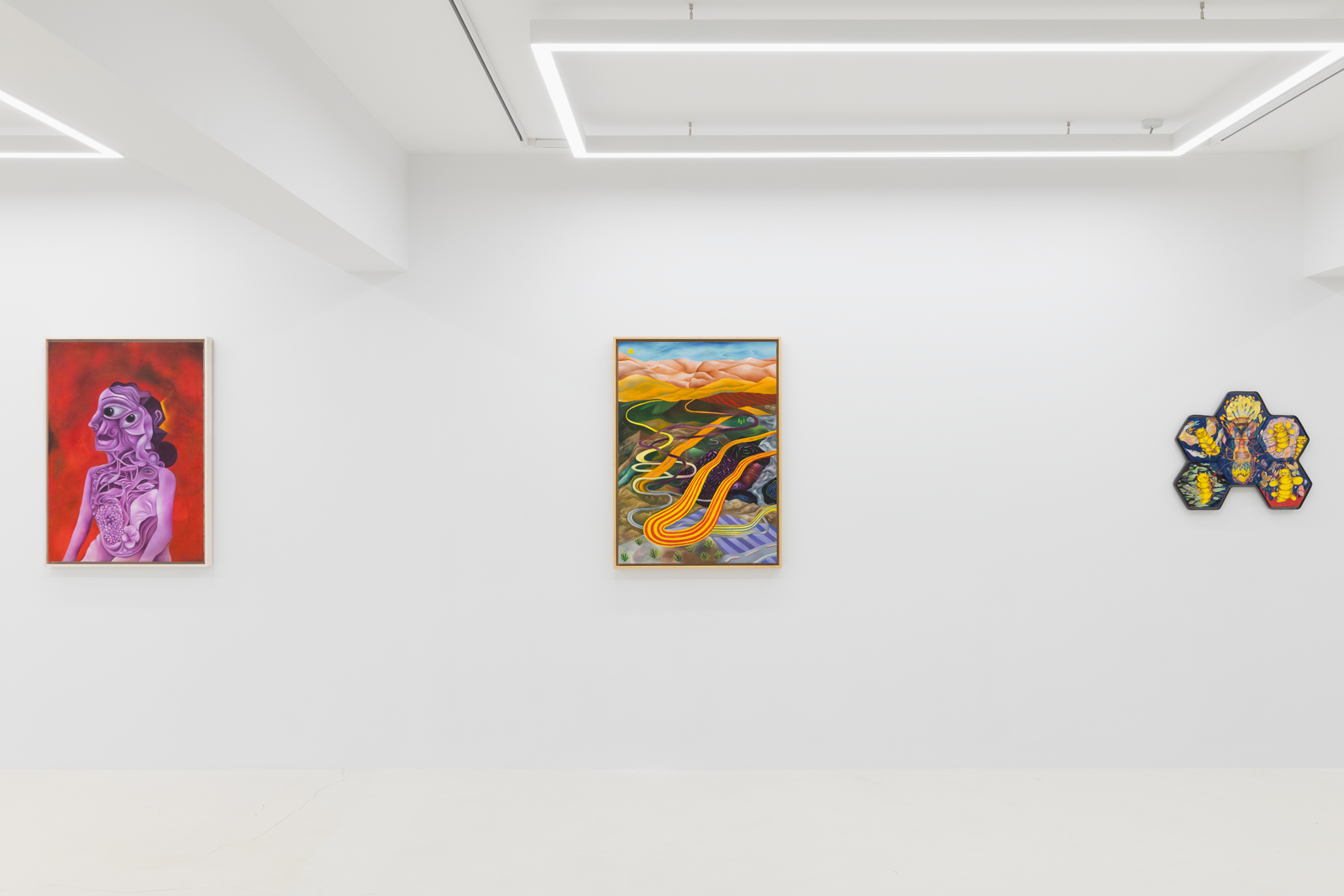
Solakoğlu’s works carry different states of a universe unfolding over time: outward-looking, pastel and playful periods; inward-turning phases of deepened world-building; characters shaped by chaos and transformation. Some remain in the present, some are reborn, some simply exist.
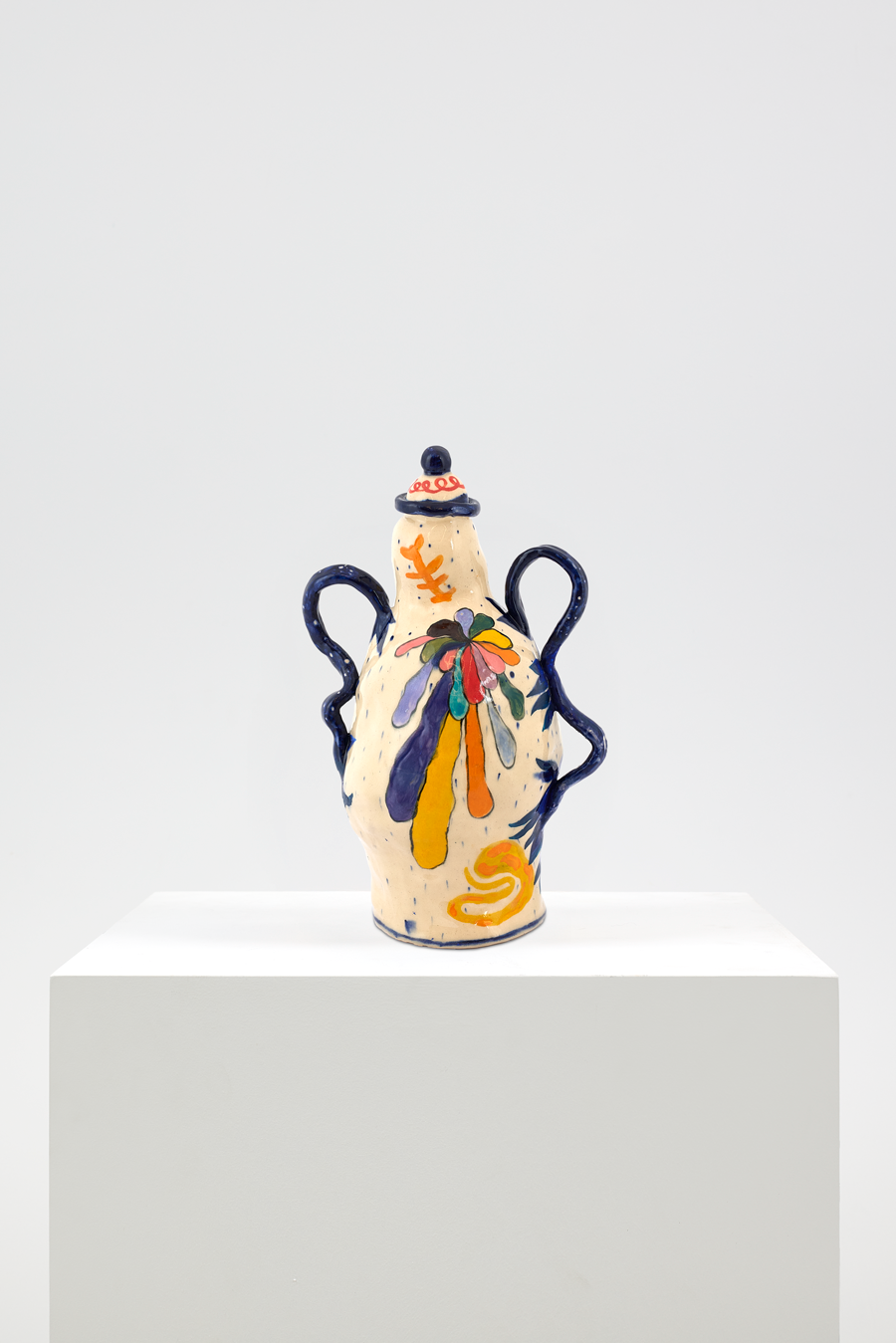
In this universe, communication does not always take familiar forms. Characters express themselves at times through colour, at times through music unknown to the viewer, produced by instruments of their own making. While the story establishes the setting like a narrative ground, colours and symbols invite the viewer’s perception and imagination into another world. Meaning is formed neither by hearing alone nor by sight alone; it is completed in the gaze, in intuition, and in imagination.
Some worlds do not hurry; they bloom precisely when they are meant to.
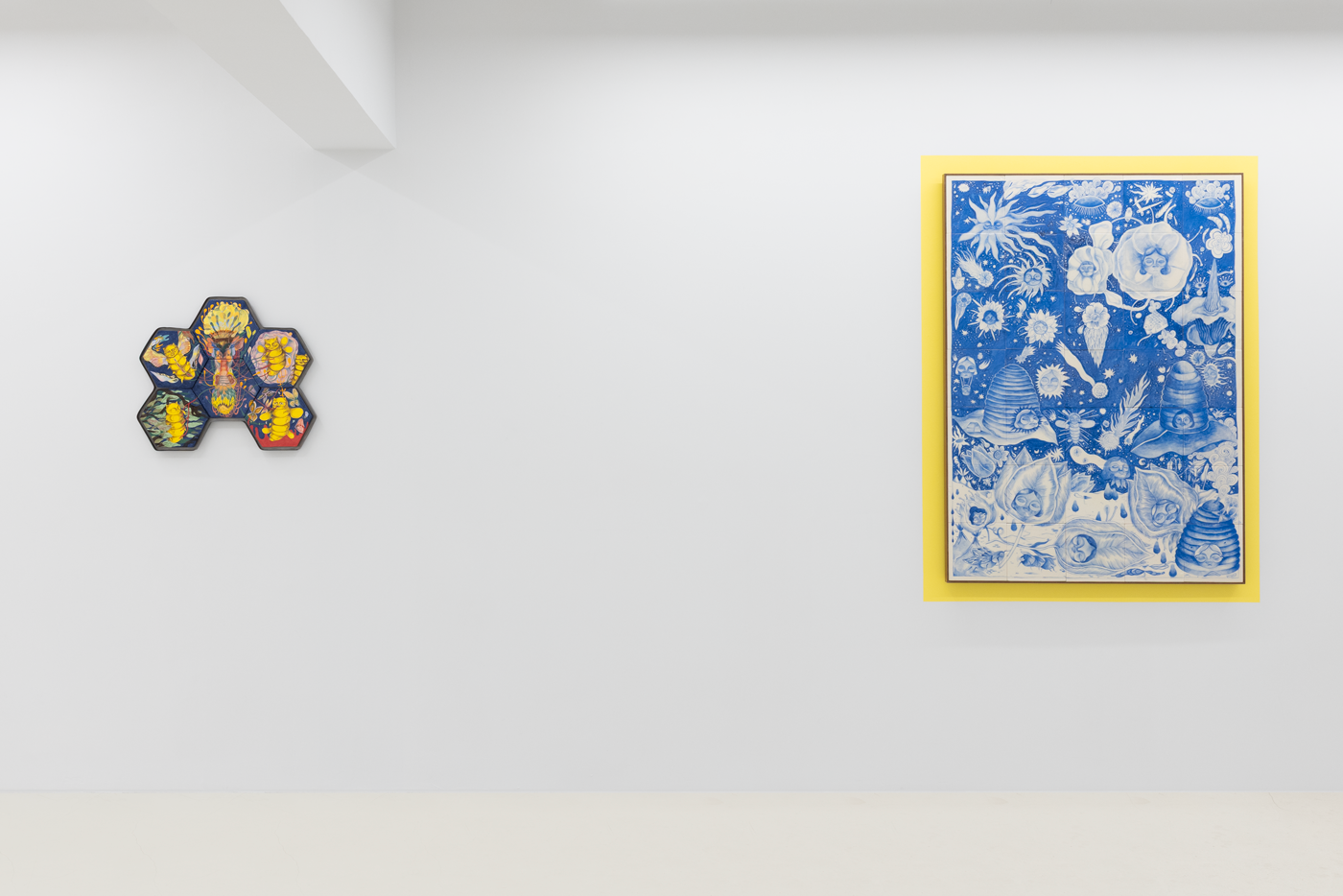
Some beings wait together beneath the ground for years;
some retreat into waiting, others shed their shells and climb upward.
Each moves according to its own clock,
yet all are invisible parts of the same structure.
And when they reach the surface,
they do not sing alone, but together.
Some flowers bloom once a year,
some once every seven years.
In this exhibition,
there is a flower that blooms once every two thousand years.
Late Bloomer is not a tale of delay,
but of remaining faithful to one’s own time.